Quality classes and committed leaders are no longer enough. English language learning can be achieved when we also have an educational community that actively participates in the teaching of English, from the principals, to the management team, to the parents.
Much is said about how bad we are as a country at teaching English, but little is said about the successful strategies that are being implemented in various parts of Chile and that are enabling students, especially in municipal schools, to learn English from an early age.
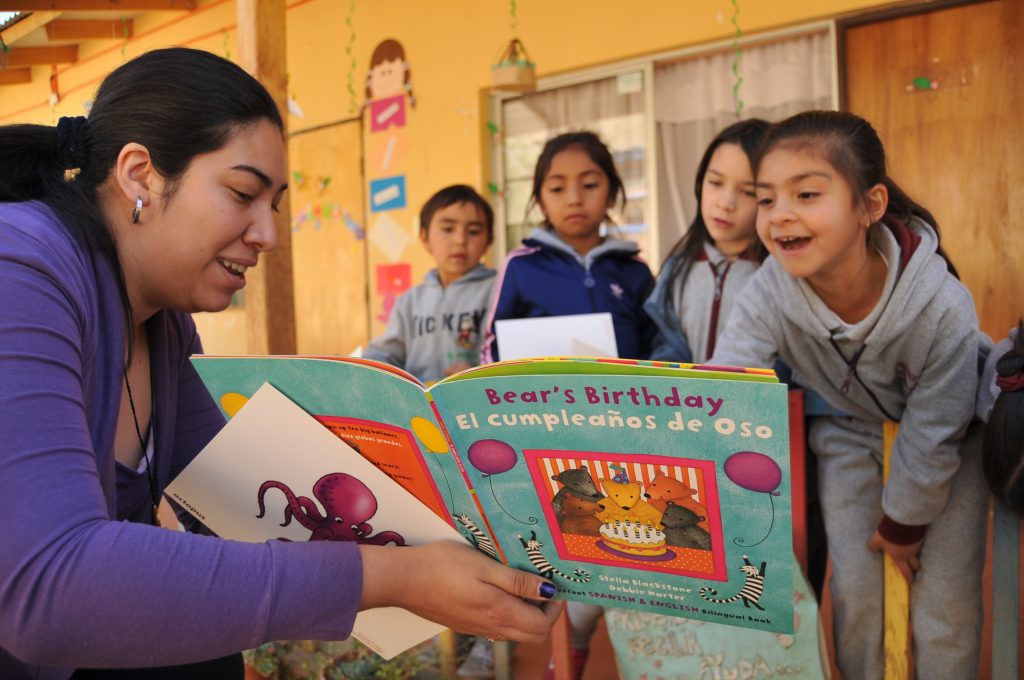
When we invite parents to use simple words or ask their children questions and they answer in English, when we send them a whatsapp audio or a simple song communication for them and their children to practice at home, we are involving the family in the teaching process and in this way reinforcing day by day what they learn in the classroom. This is one of the successful strategies of teacher Claudia Gonzalez in Paihuano.
At the Edmundo Vidal Cárdenas school in Vicuña, headmaster Ruperto Pizarro - nominated as one of the 5 best teachers in Chile - is adding other subjects to language teaching. At his school, all teachers reinforce English by asking them to use the language to say hello, ask permission to go to the bathroom, ask for the floor, among other simple expressions. In this way, English is not just one more subject in the curriculum, but extends across the whole school.
When the objective of promoting the teaching of English becomes a communal goal, activities that involve students, teachers, parents and principals are achieved, as is the case in the communes of Vicuña and Paihuano in the Elqui Valley, where during the year they organise poetry contests, English spelling bees and song festivals, in order to include the entire school community and the commune in the teaching of this language.
Quality classes and committed leaders are no longer enough. English language learning can be achieved when we also have an educational community that actively participates in the teaching of English, from the principals, to the management team, to the parents.
When we have the will and the ideas, but above all when we dare to try them, and even more, when after trying them we reflexively analyse the results and when we share these learnings with others who seek the same objective, we end up generating networking and learning communities.
Marcela Marzolo
Executive Director
Fundación Educacional Oportunidad